
Hand Laid Carbon Fiber Guide for Serious Builds
A carbon-fiber build is judged before the engine ever fires. The way the weave tracks across a fender, the depth beneath the clear coat, the shut line at the bumper – these details decide whether a car looks purpose-built or pieced together. This hand laid carbon fiber guide is for owners who expect their Corvette, Mustang, Camaro, BMW, or exotic to carry the presence of automotive art, not generic aftermarket trim.
Hand-laid carbon fiber is not a buzzword to chase blindly. It is a construction method with real visual and functional advantages when the mold quality, material selection, resin process, finish work, and installation are held to a high standard. It can also reveal every shortcut when they are not.
What Hand Laid Carbon Fiber Actually Means
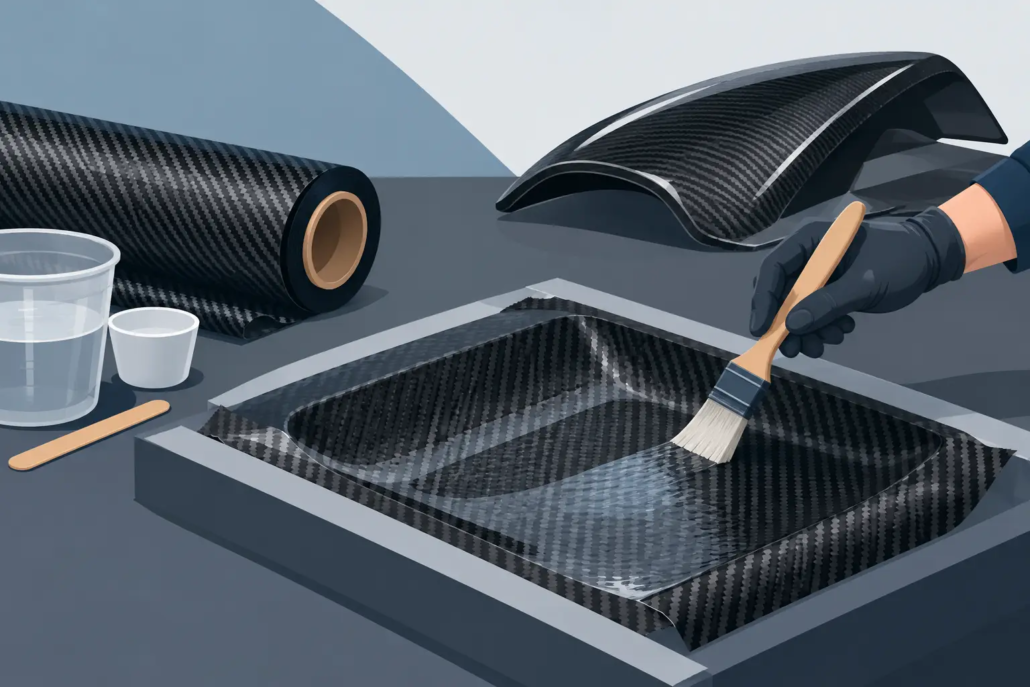
At its core, hand-laid construction means carbon-fiber fabric is positioned by hand inside a mold. The fabric is cut, oriented, and placed deliberately before resin is introduced or before a pre-impregnated material is cured. That hands-on process gives the fabricator control over the weave direction, overlap points, material coverage, and how the cloth follows a compound curve.
For visual exterior components, that control matters. A carbon-fiber splitter, side skirt, spoiler, hood, or widebody panel may have aggressive contours that do not forgive careless layup. When the weave is aligned with intention, the part looks clean from every angle. When it is not, the eye catches wandering lines, distorted patterns, excess resin, and uneven gloss immediately.
“Hand laid” does not automatically describe one exact resin system or curing method. Some parts are wet layup, where dry fabric is placed and saturated with resin. Others use pre-preg carbon fiber, which arrives with resin already controlled in the material and is then cured under specific heat and pressure requirements. Vacuum bagging can be used with either approach to help consolidate the laminate and reduce trapped air.
The point is not to memorize manufacturing vocabulary. The point is to ask what process was used, why it fits the part, and whether the finished component meets the visual and fitment standard your build deserves.
Why Hand-Laid Carbon Fiber Matters on a Show-Car Build
Factory-shaped body lines are already demanding. Once a vehicle moves into widebody territory, deep aero channels, integrated canards, extended splitters, or replacement bumper architecture, the panel has to do more than resemble carbon fiber. It has to carry the design.
A carefully hand-laid part allows the fabricator to place the weave where it will look intentional across the most visible surfaces. On a hood or roof panel, that may mean maintaining a centered, symmetrical pattern. On a quarter panel or bumper, it means managing transitions around vents, wheel arches, mounting areas, and sharp body creases. Those are the areas where premium work separates itself.
The result is visual tension with discipline. Carbon fiber has movement built into its pattern, but a serious build should never look chaotic. The weave should amplify the vehicle’s lines, not fight them.
For dramatic body conversions, this is especially important. A limited-edition system such as the XIK Widebody Kit is designed to change the entire attitude of a C7 Corvette. The carbon finish becomes part of the silhouette, not an afterthought attached to it. That demands deliberate material work and exact panel relationships.
Hand-Laid Carbon Fiber vs. Cheap Carbon-Look Parts
Carbon-look finishes have their place in low-stakes applications, but they are not the same as real carbon-fiber construction. A printed pattern, hydro-dipped surface, or vinyl overlay can create the appearance of carbon from a distance. It does not provide the depth, fabric structure, or craftsmanship of an actual laminate.
Even among real carbon parts, quality varies hard. A lower-priced component may use a thin cosmetic outer layer over fiberglass, may have inconsistent cloth orientation, or may be finished with a clear coat that yellows, hazes, or chips early. That does not make every hybrid construction unusable. In some applications, fiberglass reinforcement or a composite backing may be a reasonable engineering decision for shape, mounting, repairability, or cost control.
What matters is transparency and intended use. If you are purchasing a visual centerpiece – a rear wing, hood, exposed widebody panel, or front splitter – inspect the quality of the visible surface, edge finishing, mounting provisions, and the consistency of the weave. If the part will see regular road use, ask about the clear coat and what protection it needs against UV exposure, road debris, and heat cycles.
A premium carbon part is not just black fabric under gloss. It is a finished surface that must survive being looked at closely.
The Details That Separate Premium Carbon From Average Carbon
The weave is the first thing enthusiasts notice, but it is only one part of the equation. Start with pattern consistency. On exposed surfaces, the fabric should be straight where straight makes visual sense, symmetrical where the design calls for symmetry, and free of obvious distortion. Complex curves can require compromises, so perfection is not always physically possible. Still, the choices should look deliberate rather than accidental.
Then look at resin richness. Too much resin can add unnecessary weight and create a plastic-heavy appearance. Too little can leave dry areas or visible texture. A properly consolidated laminate has a dense, even finish without obvious voids, pinholes, bubbles, or cloudy zones beneath the clear.
Edges tell their own story. A quality component should have trimmed, finished edges and mounting areas that do not look rushed. Raw carbon can be beautiful, but raw should never mean ragged. On a large body panel, proper reinforcement around fastener locations and stress points is just as critical as the face everyone photographs.
Finally, judge the clear coat in real light. Shop lighting can hide flaws. Walk around the car outdoors. Look for wave, uneven gloss, trapped contamination, dry spray texture, and color inconsistency between parts. Carbon fiber is unforgiving because it reflects everything.
Fitment Is Part of the Craft
A flawless weave does not save poor fitment. If a bumper fights the fenders, a skirt sits unevenly, or a deck wing requires excessive force to mount, the vehicle loses the crisp, engineered look that premium aero should create.
Fitment begins with accurate molds, but installation matters just as much. Cars vary with prior repairs, production tolerances, suspension setup, and existing modifications. A professional installer should test-fit panels before final paint, clear coat work, or permanent mounting. On extensive conversions, panel alignment is a process, not a single bolt-on moment.
Expect some custom work on an aggressive body build. That is not automatically a red flag. The question is whether adjustments are controlled and clean, or whether the installer is forcing a part to hide poor design. The finished gaps, contours, and hardware should look intentional from the curb and under close inspection.
Choosing the Right Carbon Finish for Your Vision
Gloss carbon delivers maximum contrast and visual depth. It is the right choice when the goal is a high-impact build that catches lights, cameras, and every eye at the show. It pairs naturally with deep paint colors, forged wheels, exposed aero, and an unapologetic wide stance.
Satin or matte carbon creates a more technical, stealth-driven presence. It can make the weave feel less decorative and more motorsport-inspired, especially on darker builds. The trade-off is maintenance. Matte and satin finishes cannot always be corrected with conventional polishing if they are scratched or stained, so care products and wash technique matter.
Painted carbon is another legitimate direction. Not every panel needs exposed weave. Some owners use carbon construction for the part’s form while painting most of the surface to match the car, leaving selected sections exposed for contrast. This can make a larger conversion feel more integrated while preserving the material’s premium character in the right places.
There is no universal best finish. A fully exposed-carbon build makes a statement. A paint-and-carbon combination can make a statement with more restraint. Build for the vehicle’s design language, not a trend that will look dated by next season.
Care That Keeps Carbon Fiber Looking Expensive
Carbon fiber does not need complicated rituals, but it does need disciplined care. Wash it with pH-balanced automotive products, use clean microfiber towels, and avoid abrasive brushes around leading edges and clear-coated surfaces. Road grit can scratch a glossy finish faster than most owners realize.
Paint protection film is worth considering for splitters, rocker extensions, bumper corners, and other areas that live close to the pavement. Ceramic coatings can make routine cleaning easier and improve water behavior, but they are not armor against rock chips. The right protection depends on how the vehicle is used: a weekend show car has different needs than a car that sees highway miles every week.
Inspect mounting hardware periodically, particularly on wings, splitters, and lower aero exposed to vibration and impact. If a part develops a crack, loose mounting point, or clear-coat damage, address it early. Small issues become expensive when moisture, flex, and road debris are allowed to work on them.
The best carbon-fiber build does not scream for attention because it is covered in parts. It earns attention because every exposed weave, panel gap, and reflection looks chosen. Choose components with the same standard you bring to the rest of the car, then let the craftsmanship do the talking.
