
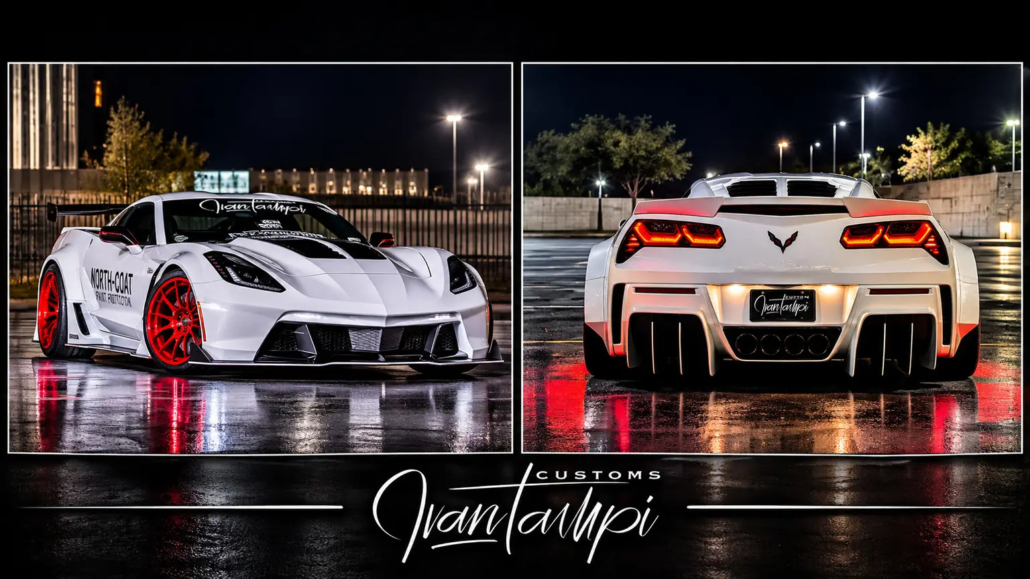
Best Corvette C7 Widebody: What Sets It Apart
A C7 Corvette does not need help looking fast. It needs a reason to look unforgettable. The best Corvette C7 widebody is not the one with the most random add-ons or the loudest paint scheme. It is the build that changes the car’s entire silhouette with purpose – wider haunches, sharper aero, proper wheel fitment, and proportions that make the factory body look almost restrained.
A real widebody conversion turns the C7 into something more exotic, more aggressive, and far more personal. Done right, it does not look like a collection of aftermarket parts. It looks like the car arrived from another level of Corvette design.
What Makes the Best Corvette C7 Widebody?
The answer starts with design continuity. A widebody is judged from every angle: head-on at a show, rolling down the highway, backed into a parking space, and photographed low from the rear quarter. If the front bumper, fenders, side skirts, quarter panels, and rear fascia are not speaking the same visual language, the car loses impact.
The strongest C7 widebody designs create a continuous line from the front wheel opening through the side profile and into the rear haunch. The widened body should feel intentional, not inflated. There is a major difference between adding width and sculpting width. The first makes a Corvette larger. The second makes it look like a custom-built supercar.
That is why a complete system usually delivers a more convincing result than piecing together unrelated components. Matching parts preserve the same surface tension, vent style, edge treatment, and visual aggression across the vehicle. The result is a C7 that carries authority from nose to tail.
Replacement Panels Change the Entire Impression
A replacement bumper or properly engineered panel is a different proposition from a simple overlay. Overlays can serve a purpose for targeted styling upgrades, but a show-level widebody conversion needs a foundation that controls the full shape of the car.
Replacement front and rear bumpers can establish deeper openings, more dramatic geometry, and transitions that actually belong with widened fenders. Replacement quarter panels allow the rear body line to grow outward with a cleaner, more integrated finish than a surface-mounted flare. This is where the transformation becomes believable.
For owners chasing a vehicle that gets photographed, remembered, and recognized, body integration matters more than a single dramatic piece.
Carbon Fiber Is More Than a Finish
Carbon fiber has become one of the most recognizable materials in high-end automotive styling, but not all carbon components deliver the same experience. The weave may catch attention, yet the construction, finish quality, panel consistency, and fitment are what separate premium automotive art from a part that looks impressive only in product photos.
Hand-laid carbon fiber brings a level of craftsmanship that suits the C7 platform particularly well. The Corvette already blends American muscle-car force with supercar proportions. Carbon fiber adds technical character without softening that edge. It gives splitters, spoilers, skirts, diffusers, and body panels a race-inspired visual language that works whether the car is finished in a deep metallic color, exposed carbon, or a full custom wrap.
There is also a practical trade-off. Carbon fiber deserves careful installation, thoughtful panel alignment, and regular finish care. A widebody Corvette built with premium materials is not a disposable style exercise. It is an investment in a visual identity. Owners who want the best result should expect to treat the build accordingly.
Exposed Weave or Painted Carbon?
There is no universal answer. Exposed carbon fiber makes the material part of the statement. It works especially well when the car carries complementary carbon details on the splitter, wing, hood, roof, mirrors, and interior. The texture gives the body a technical, high-dollar presence before the engine ever starts.
Painted carbon is the move when the goal is a cleaner, more unified color presentation. It lets the widened shape do the talking while retaining the benefit of composite construction beneath the paint. Many of the strongest builds use both: painted primary panels with exposed carbon aero pieces that frame the bodywork.
The decision should come from the intended personality of the car. A dark exposed-carbon build can feel sinister and track-bred. A color-matched widebody with gloss-carbon accents can feel more like a custom exotic. Both can be exceptional when the details are coordinated.
Wheel Fitment Is Where Widebody Builds Win or Lose
A widebody conversion without the right wheels is an unfinished statement. The added body width creates room for a more commanding wheel and tire package, but filling that space correctly requires planning. A wheel that sits too far inward leaves a shadowy, underwhelming gap. One that pushes too far outward can create clearance issues, damage paint, and make an expensive build look careless.
The ideal setup puts the wheel face and tire sidewall in a relationship with the new fender line that feels deliberate. On a street-driven C7, that balance must account for suspension travel, steering angle, tire profile, ride height, and real-world road conditions. On a show-focused build, the stance can become more aggressive, but fitment still needs to look engineered rather than forced.
Forged wheels are a natural partner for a premium C7 widebody because they allow greater control over sizing, offsets, finish, and spoke design. More important than brand labels, however, is choosing a wheel architecture that supports the body. Deep concavity and directional spoke patterns can amplify the width of the rear quarters. A wheel design that is too delicate may get visually swallowed by a dramatic widebody.
Before ordering wheels, finalize the body kit, suspension plan, brake package, and tire direction. This prevents the common mistake of buying wheels for a factory-body Corvette and trying to make them work after the body grows around them.
Aero Must Support the Shape
The front splitter, side skirts, rear diffuser, deck spoiler, and GT wing should not compete with the widebody. They should sharpen it.
A low front splitter gives the nose a planted, predatory look. Side skirts visually lower the center of the car and connect the widened front and rear sections. At the back, a diffuser brings depth beneath the bumper, while the wing or spoiler sets the final attitude. A subtle deck spoiler may suit a polished exotic-inspired build. A larger GT wing brings a more unapologetic track-car presence.
This is a place where restraint has value. If every edge is oversized, the eye has nowhere to land. The best builds create hierarchy: the widebody establishes the silhouette, the wheels fill the stance, and the aero details add precision.
Fitment Is the Difference Between Custom and Compromised
Even the most striking design can be undermined by poor installation. Uneven panel gaps, rushed trimming, mismatched weave orientation, visible hardware where it does not belong, and inconsistent paintwork will pull attention away from the design for all the wrong reasons.
A serious C7 widebody project should be approached as a complete build, not a weekend of unboxing parts. Test-fitting, surface preparation, panel alignment, paint or finish planning, and final assembly all matter. Depending on the scope, professional installation may be the right choice, especially when replacement bumpers, widened quarter panels, and custom wheel fitment are involved.
The XIK Widebody Kit from Ivan Tampi Customs was created for owners who want that complete visual takeover: a limited-edition, 14-piece hand-laid carbon-fiber system with replacement bumpers, widened fenders and quarter panels, side skirts, spoilers, and splitters designed to read as one unmistakable machine.
Choose the Build That Matches Your Corvette’s Mission
The best C7 widebody for a weekend canyon car is not always the same as the best one for a SEMA-level display build. A daily-driven Corvette may need more ride-height clearance, a less extreme splitter, and wheel-and-tire choices that tolerate rough pavement. A dedicated show car can pursue a lower stance, exposed weave throughout, larger aero, and a more radical finish.
Budget matters too, but the wiser question is where the money creates the most impact. A complete, coherent conversion with correct fitment usually carries more presence than a car covered in individually expensive parts that do not share a design direction. Start with the body, then build the wheels, aero, finish, lighting, and interior around it.
A C7 widebody should never feel like an apology for not buying something exotic. Built with the right proportions, carbon-fiber craftsmanship, and ruthless attention to fitment, it becomes the car the exotics notice when they pull into the show.
