
What Makes a Quality Widebody Kit Stand Out?
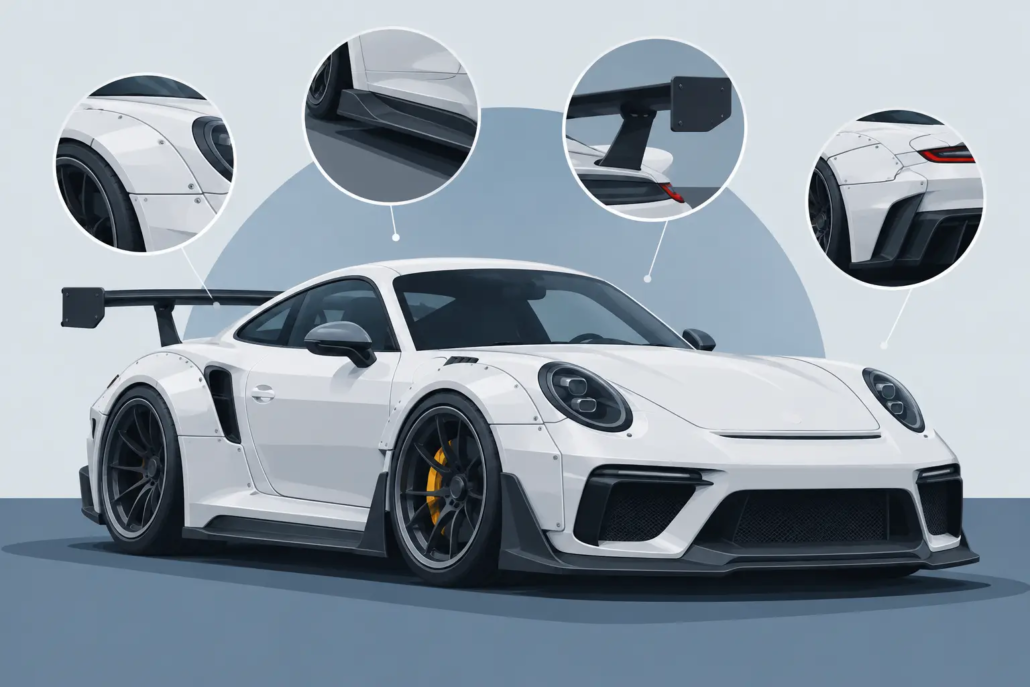
A widebody can turn a familiar performance car into something that stops traffic before the engine even fires. But bigger is not automatically better. What makes a quality widebody is the difference between a build that looks factory-engineered for the stage and one that looks like mismatched panels added in a hurry. The best kits create presence without sacrificing the body lines, panel gaps, wheel geometry, or attitude that made the car worth building in the first place.
For a serious owner, a widebody is not a cosmetic shortcut. It is a complete visual statement. Every flare, vent, edge, and transition has to earn its place.
What Makes a Quality Widebody Worth the Investment?
Quality starts long before carbon fiber is laid into a mold. It starts with design discipline. A widebody must feel connected to the vehicle’s original architecture, even when the finished car looks radically different from stock. The fender extensions need to carry the movement of the hood, doors, rocker panels, bumpers, and rear quarters instead of fighting them.
That is why a quality kit looks dramatic from every angle, not just in a carefully cropped photo. The front profile should introduce the new width with intent. The side view should have a clean visual flow from the front fender through the skirt and into the rear quarter. At the rear, the widened body needs to resolve around the bumper, diffuser, deck wing, and exhaust layout without looking swollen or unfinished.
A quality widebody does not simply make the car wider. It makes the car look lower, more planted, and more dangerous. Proportions are everything.
Wide Enough to Command Attention, Not Lose the Car
The strongest widebody designs exaggerate what is already special about the platform. A C7 Corvette, for example, has sharp creases, a low beltline, and an aggressive rear haunch. A properly designed conversion amplifies that DNA rather than burying it under random shapes.
Overbuilt arches can make a car look heavy if the rest of the design does not support them. Undersized side skirts leave the widened fenders hanging in space. A rear bumper that remains visually narrow can make even expensive quarter panels look like bolt-on accessories. This is why complete systems matter. The components must speak the same design language.
There is also a trade-off between visual impact and usability. Extreme width creates an unforgettable silhouette, but it can affect garage clearance, parking, road debris exposure, and wheel protection. The right answer depends on whether the vehicle is a showpiece, a weekend weapon, or a car that sees regular street miles. A quality manufacturer designs for the intended mission instead of pretending every build has the same requirements.
Fitment Is Where Premium Becomes Obvious
No material can rescue poor fitment. Carbon fiber may look exotic, but if the panel edges wave, the gaps wander, or the mounting points need excessive modification, the final build loses its authority.
High-level fitment begins with accurate molds and repeatable production. Mounting surfaces must align with the vehicle, and panel thickness needs to be consistent enough to support clean installation. Replacement bumpers, widened fenders, quarter panels, skirts, splitters, and spoilers should work as a system, with transitions that look intentional once the car is assembled and painted or clear-coated.
This does not mean any widebody conversion is a five-minute driveway install. Serious bodywork requires skill. Rear quarter conversions may demand cutting, bonding, reinforcing, blending, paint correction, and careful alignment by an experienced shop. The difference is that a quality kit gives that shop a strong foundation. It should not force the installer to redesign the part just to make it sit correctly.
Before committing, ask direct questions about fitment, required modifications, hardware, finishing expectations, and professional installation. A seller that understands its product can explain where the work lives and what the finished result should require.
Carbon Fiber Must Be More Than a Marketing Label
Carbon fiber is one of the most striking materials in custom automotive design, but not all carbon fiber parts are created equal. A premium widebody component should have intentional layup, consistent weave where exposed, properly controlled resin, and enough structure to hold its shape under real use.
Hand-laid carbon fiber carries a different level of craftsmanship than a thin cosmetic skin. The visual payoff is obvious when the weave runs cleanly across a hood, flare, splitter, or wing. More importantly, the part needs proper rigidity and stable mounting areas. Flimsy panels can flex, crack around fasteners, distort in heat, or reveal uneven surfaces once light hits them at a car show.
Finish matters just as much. Exposed carbon should have depth, clarity, and a finish that complements the rest of the vehicle. Painted carbon needs straight body lines and stable surfaces underneath the color. Whether the goal is a full exposed-carbon build or a color-matched widebody with carbon accents, the material should look like automotive art, not a rough composite experiment.
Wheel and Tire Fitment Complete the Statement
A widebody without the right wheel and tire package is unfinished. The added width exists for a reason: to create a more commanding stance and, when the build calls for it, support wider rolling stock. If the wheels sit too far inside the arches, the car loses the muscle the conversion was built to create. If the wheels poke too far out, the build can look careless and become difficult to drive.
Offset, wheel width, tire section width, ride height, camber, suspension travel, and steering clearance all work together. There is no universal wheel specification that fits every widebody build. Brake setup, coilovers, air suspension, and intended ride height change the equation.
The goal is controlled aggression. At rest, the wheel should fill the arch with purpose. In motion, the tire needs clearance through compression and steering travel. A professional measurement process before ordering wheels can prevent expensive mistakes after the body is already installed.
Aero Details Need a Job Beyond Looking Fast
Splitters, canards, diffusers, vented fenders, deck wings, and GT wings can make a widebody unforgettable. They can also ruin a design when they are added without proportion or purpose. Good aero accessories extend the language of the body rather than competing for attention.
On a street-driven show car, visual balance may be the main priority. On a track-focused build, airflow management, mounting strength, and real downforce considerations carry more weight. A tall wing may deliver the race-car profile an owner wants, but it needs proper brackets and reinforcement. A front splitter needs enough strength to survive real road use, not just look sharp in the studio.
The best builds choose aero as part of one composition. The front end, side profile, and rear of the car should look connected. That is why a complete design lineage carries more presence than a collection of unrelated aftermarket parts.
The Installer Is Part of the Quality Equation
Even the finest body kit can be compromised by rushed preparation or weak paintwork. Panel alignment, bonding, seam finishing, paint blending, clear-coat correction, and final assembly all determine whether the car looks elite under harsh sunlight and close inspection.
Choose a shop that has experience with composite panels and understands show-car standards. Ask to see completed work from multiple angles, including door gaps, bumper transitions, rocker alignment, and exposed-carbon finishes. A shop that only photographs a car from twenty feet away may not be the shop for a high-dollar widebody conversion.
Ivan Tampi Customs approaches this category as automotive art, and that standard should continue through the entire build. The body kit, wheels, aero, paint, lighting, and interior details need to feel like one vision when the car rolls out.
Exclusivity Gives the Build Its Lasting Power
A quality widebody should not only look impressive on delivery day. It should still feel special after the first wave of attention fades. Limited-production design, recognizable styling cues, and a defined artistic point of view give a build that staying power.
There is nothing wrong with choosing a subtle conversion, but an exceptional widebody does not apologize for being seen. It transforms the car into a signature piece. When the proportions are right, the fitment is precise, the carbon fiber is properly crafted, and every component shares the same visual direction, the result does more than turn heads. It gives the owner a car people remember long after it has left the show field.
