
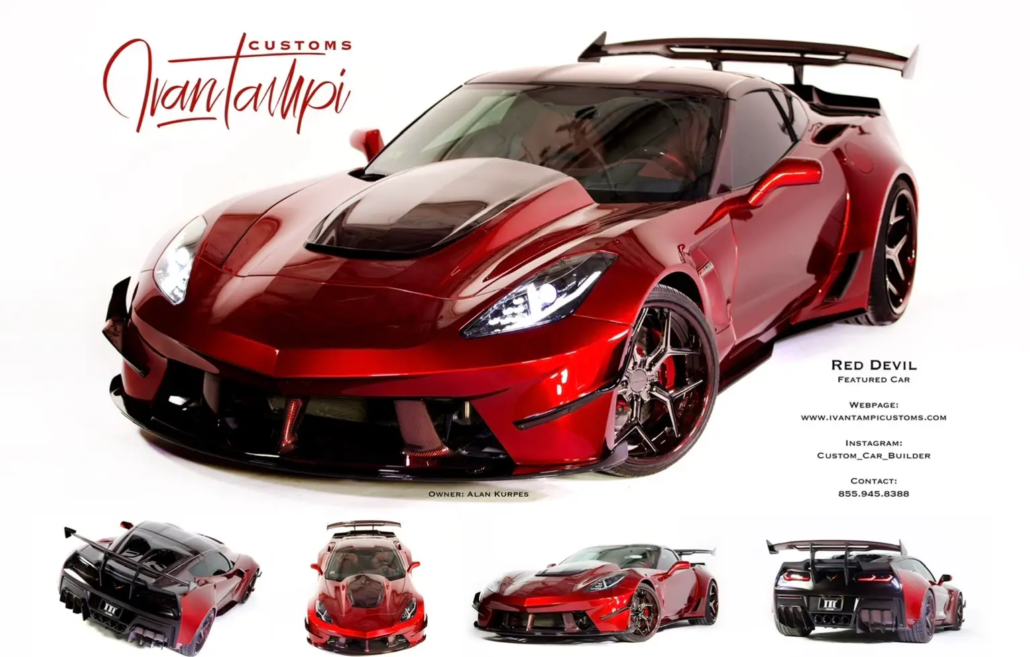
Corvette Car Show Build for Real Spotlight
A serious Corvette car show build is not a pile of expensive parts. It is a visual statement with a point of view. When the doors open, the stance, body lines, carbon weave, wheel fitment, and paint finish need to hit as one composition. If one piece looks accidental, the entire car loses force.
The difference between a modified Corvette and a show-stopping Corvette is discipline. Factory bodywork is already recognizable. A winning build pushes that familiar silhouette into something lower, wider, sharper, and impossible to confuse with the car parked next to it.
Start With a Corvette Car Show Build Vision
Before ordering a splitter, wheel, or wing, decide what your Corvette is meant to be. An exotic-inspired widebody car calls for aggressive proportions, exposed carbon fiber, deep-concave wheels, and a stance that looks planted before the engine starts. A clean OEM-plus build requires restraint, with fewer changes and much tighter attention to finish quality.
Trying to combine every trend usually creates a car with no identity. A massive GT wing, chrome wheels, bright graphics, air suspension, and a luxury-style interior can work together only when the theme supports them. The best builds make every modification feel inevitable.
For a C7 Corvette, the body conversion often establishes the entire direction. Wider fenders and quarter panels change more than exterior appearance. They determine wheel width, offset, tire profile, ride height, side-skirt depth, and how aggressive the rear diffuser needs to be. Build around the major visual element, not around the last accessory you found.
Choose the Moment You Want People to Remember
Show cars are judged by memory as much as detail. People remember the car with the uncompromising rear profile, the carbon fiber that looked almost liquid under the lights, or the wheel-and-fender fitment that made the whole Corvette look custom-built rather than assembled.
Pick that moment early. It may be the widebody silhouette. It may be a dramatic deck wing, a Black Widow-inspired rear treatment, or a color-and-carbon combination nobody can miss. Then support that choice throughout the build.
Proportion Is the Foundation of the Build
A widebody Corvette can look exotic, but only if the proportions are correct. Adding width without changing the wheel package leaves empty space and weakens the effect. Mounting oversized wheels without enough sidewall can make the car look like a display model rather than a performance machine.
The body, wheels, tires, and suspension should be planned as a system. Measure actual clearance after the body components are fitted, not from an internet fitment chart written for stock fenders. Factor in steering lock, suspension compression, tire growth at speed, and the clearance needed to drive onto a trailer or into a show field without destroying the front end.
Wheel finish matters, too. Forged wheels with a dark brushed center, exposed hardware, or a properly chosen polished lip can frame carbon fiber beautifully. The wrong finish can compete with the bodywork. On a loud paint color, a more controlled wheel finish usually gives the build balance. On black, gray, or white paint, the wheel can carry more visual drama.
Ride height should look intentional, not merely low. A Corvette that sits too high loses its menace. One that sits too low becomes impractical, risks damaging expensive aero, and can look awkward if the suspension geometry is compromised. The target is a tight, controlled relationship between tire and fender, with enough function left to move the car confidently.
Carbon Fiber Must Earn Its Place
Carbon fiber is not decoration. On a premium show build, it is material language. It adds texture, depth, and race-bred character, especially when it appears in components that naturally support the car’s aerodynamic profile: splitters, side skirts, diffusers, spoilers, wings, mirrors, and interior accents.
The trade-off is simple. Too much exposed carbon can make the car visually busy, especially when every panel carries a different weave direction, gloss level, or fit quality. Carbon looks strongest when it is used with purpose and installed with precision.
A hand-laid carbon-fiber widebody system creates an entirely different presence than cosmetic overlays. Replacement bumpers, widened fenders, quarter panels, skirts, spoilers, and splitters reshape the Corvette rather than simply decorating it. That is why a complete design family matters. The front, sides, and rear need to speak the same visual language.
Ivan Tampi Customs approaches this kind of transformation as automotive art, not generic replacement-part styling. The goal is a profile that carries the same intensity from the front corner to the rear diffuser, with surfaces that look engineered for the car instead of added after the fact.
Finish Quality Is What Separates a Build From a Project
Under outdoor sunlight, a rushed build can hide its flaws. Under event lighting and camera flashes, every weak edge becomes visible. Panel gaps, uneven clear coat, misaligned weave, adhesive residue, chipped hardware, and inconsistent gloss all stand out.
Fit every major component before paint or final finishing. Test hood, door, hatch, bumper, and wheel clearance more than once. If a widebody panel requires blending or bodywork, do not treat that stage as an afterthought. Great fabrication and paint preparation are where the build earns its credibility.
For exposed carbon, protect the surface with a high-quality UV-stable clear finish and maintain it properly. For painted components, match the texture and gloss from panel to panel. A flawless paint correction and ceramic protection will not fix poor bodywork, but they will make excellent work look even more expensive.
Build the Rear View Like It Is the Main Event
At most shows, people spend more time behind your Corvette than in front of it. The rear is where a build either delivers a final hit or fades out. A properly designed diffuser, exhaust layout, rear deck wing, taillight treatment, and widened quarter profile can create a finish people remember.
This is also where restraint matters most. The wing should match the aggression of the body. A tall GT wing has a race-car attitude and works best when the rest of the car has the width and aero presence to support it. A lower deck wing may be the better choice for a refined, high-end street show car.
Keep the exhaust centered and clean, with tips that suit the diffuser openings. Avoid visible clamps, hanging wiring, mismatched finishes, and soot-stained surfaces. At a car show, details below waist level are not invisible. They are where serious owners look first.
The Cabin Should Continue the Exterior Story
A show build does not need a fully custom interior, but the cockpit should not feel abandoned. A carbon-fiber steering wheel, coordinated trim, premium upholstery accents, and clean display integration can pull the whole experience together.
Do not overbuild the cabin if the exterior is the hero. A heavily customized interior can compete with an already aggressive widebody design. Choose a few high-impact elements, finish them correctly, and make sure the colors and materials belong with the exterior theme.
Cleanliness is non-negotiable. Remove personal clutter, worn floor mats, random air fresheners, and anything that makes a high-dollar build feel ordinary. At the show, bring microfiber towels, detail spray, glass cleaner, tire dressing that does not sling, and a small kit for fingerprints and emergency touch-ups.
Prepare for the Show, Not Just the Photos
A Corvette can look perfect in a controlled photo shoot and still arrive at an event looking unfinished. Build time into the schedule for alignment, paint correction, final fitting, road testing, and a proper pre-show detail. Never reveal a major body conversion for the first time on the same day it leaves the shop.
If the car is extremely low or carries a deep front splitter, trailer it. That is not a compromise. It is how you protect the work. Bring wheel chocks, ramps, cleaning supplies, and a plan for positioning the car once it is unloaded. A great stance is part of the presentation, and so is the way the car sits in its space.
The strongest Corvette car show build is not the one with the longest modification list. It is the one that looks fully resolved from twenty feet away, then rewards anyone who steps closer. Build for that second look. That is where the real impact lives.
