
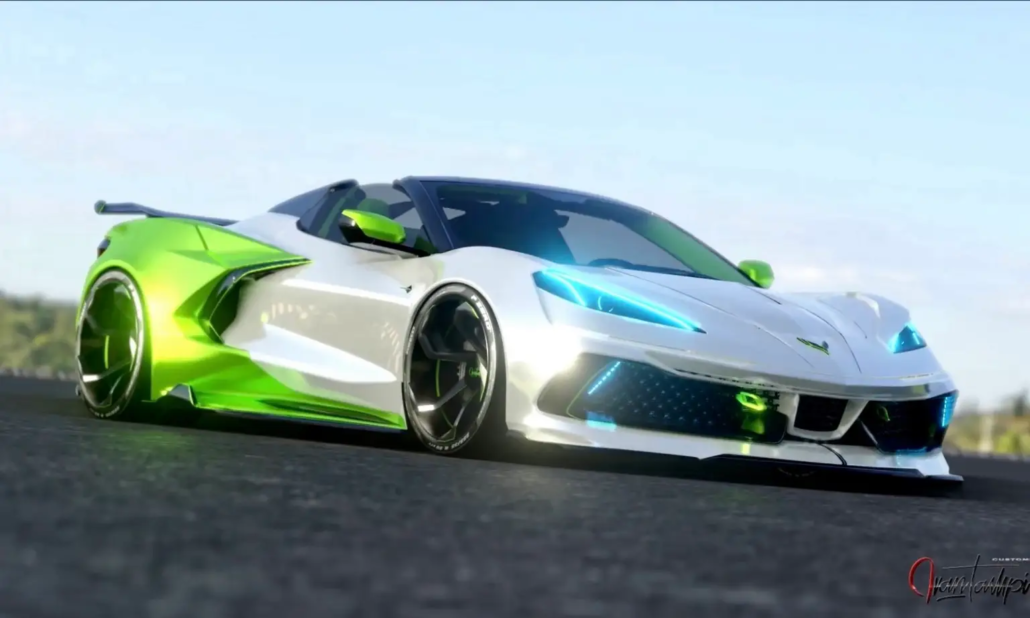
Ivan Tampi’s Black Widow Widebody Kit for Corvette C8
The stock C8 Corvette is already a mid-engine statement. Ivan Tampi’s Black Widow widebody kit for Corvette C8 takes that statement past factory limits, pushing the car toward the kind of low, planted, exotic presence that owns a show field before the engine even starts. This is not styling for the owner who wants to blend in at a Corvette meet. It is visual aggression with a purpose.
The Black Widow design language is built for drivers who see their Corvette as a canvas, not a finished product. Every widened surface, exposed-carbon detail, and race-inspired line has to work together. The goal is not to make a C8 merely look bigger. The goal is to give it a silhouette that feels designed from the ground up.
What Defines the Black Widow C8 Widebody Look
A true widebody conversion changes the visual architecture of the car. On a C8, that starts with the relationship between the fenders, quarter panels, rocker area, front fascia, and rear end. If those elements do not flow as one composition, the result can look like a collection of add-on parts. A Black Widow-inspired build demands a sharper standard.
The front end needs to sit low and wide, with air-management details that add menace without burying the C8’s factory character. The side profile is where the transformation becomes unmistakable. Wider fenders and sculpted rocker treatments visually lower the car, while the expanded rear quarters give the mid-engine Corvette the authority of a purpose-built exotic.
At the rear, the design has to finish with intent. A properly chosen diffuser, deck wing, or GT wing can add the final layer of motorsports attitude, but proportions matter. Too little rear aero and the build can feel unfinished. Too much wing for the rest of the package can turn an artistic widebody into a parts-bin statement. The right combination gives the C8 a rear view people remember.
Why Carbon Fiber Belongs on a C8 Widebody Build
Carbon fiber is not just a texture pasted onto a high-dollar sports car. When used correctly, it is a material that supports the entire visual mission. Its weave, depth, and finish create contrast against painted bodywork, while its lightweight reputation keeps it aligned with performance-car culture.
For a Black Widow-style C8, exposed carbon works best when it is intentional. A carbon-fiber splitter can visually pull the nose closer to the pavement. Carbon side skirts can connect the widened front and rear forms. A carbon rear diffuser or wing can give the back of the car a technical, track-focused finish.
There is a trade-off. Full exposed carbon makes a louder statement and rewards close inspection under show lighting, but it requires a higher level of care. Road debris, UV exposure, improper washing, and careless installation can compromise the finish over time. Painted carbon or painted composite sections may make more sense for an owner who wants a more unified color theme or drives the car hard on public roads.
The best material choice depends on the intended life of the car. A weekend showpiece can lean heavily into visible weave and high-gloss drama. A frequently driven C8 may benefit from strategic carbon accents paired with durable painted surfaces and paint-protection film in vulnerable areas.
Stance Is Where the Kit Becomes a Statement
A widebody without the right wheel and tire package is unfinished. The larger bodywork creates visual space that factory-width wheels cannot always fill. Wheel fitment must be planned with the kit, not selected after the panels are mounted.
Deep-concave forged wheels, proper offsets, and tire sizing that fills the arches without rubbing are central to the Black Widow attitude. The objective is a planted, muscular stance, not a wheel setup that looks pushed outward only for photographs. Wheel width, suspension height, alignment settings, brake clearance, and steering travel all need to be considered as one system.
Lowering the C8 can sharpen its posture, but lower is not automatically better. A car that scrapes on every driveway, damages an expensive splitter, or cannot clear a lift is not a finished build. Front-lift compatibility, street conditions, and how often the car will be driven should influence the final ride height.
A strong widebody build looks composed from every angle: front three-quarter, side profile, rear three-quarter, and the view from behind. That takes measurements, test fitting, and restraint. The right stance makes the car look fast even standing still.
Fitment Is the Difference Between Custom and Compromised
Premium bodywork deserves premium installation. That means panel alignment, clean transitions, consistent gaps, secure mounting, and correct surface preparation before paint or final carbon finishing. A widebody project is not the place to rush fabrication or hand the car to a shop that treats exotic composites like ordinary bumper covers.
The C8’s mid-engine layout and factory lines make proportion especially important. The rear quarter area carries much of the car’s visual weight, so widened panels must blend naturally into the door, roofline, rear fascia, and engine-bay area. The front must match that authority without appearing disconnected from the rear.
Before committing to a complete conversion, owners should think through the full build vision. Color choice, wheel finish, brake caliper color, interior accents, ride height, lighting, and aero all affect the finished result. Gloss black wheels may make exposed carbon feel more sinister. Brushed or polished forged wheels can take the build in a more exotic, high-fashion direction. A vivid paint color can make the widened surfaces impossible to ignore, while a darker finish puts more focus on contours and carbon weave.
This is why a complete design language matters. Ivan Tampi Customs has built its reputation around dramatic Corvette transformations that read as automotive art, not disconnected accessories. The Black Widow lineage is about creating a vehicle with a signature, not simply adding width.
Building for the Street, the Show, or Both
Every C8 owner has a different threshold for compromise. A car built primarily for shows can prioritize ground-hugging ride height, high-gloss exposed carbon, extreme wheel fitment, and a large rear wing. It can be unapologetically dramatic because its job is to stop traffic and collect attention.
A street-driven C8 needs a more balanced approach. Durable finishes, sensible clearance, secure mounting, protective film, and a wheel-and-tire package that behaves predictably on real pavement become more valuable. The car can still look ruthless without becoming fragile.
For owners who track their Corvette, the conversation changes again. Aero components should be selected for more than visual theater, and the added width must work with tire, suspension, cooling, and brake goals. A widebody can support a serious performance identity, but the entire setup has to be engineered around how the car will actually be used.
That is the beauty of a properly executed Black Widow C8 concept: it can be tailored without losing its identity. The details may change, but the mission stays the same – wider, lower, sharper, and impossible to mistake for stock.
A C8 Should Look as Serious as It Feels
The Corvette C8 moved America’s most recognizable sports car into exotic-car territory with its mid-engine proportions. A Black Widow widebody direction takes that opportunity and refuses to play it safe. It gives the car visual mass, carbon-fiber edge, and the kind of stance that makes people circle back for another look.
Build it with intention. Choose components that speak the same design language, give the installation the precision it deserves, and make every finish decision support the final silhouette. The right C8 widebody does not ask for attention. It takes it.
