
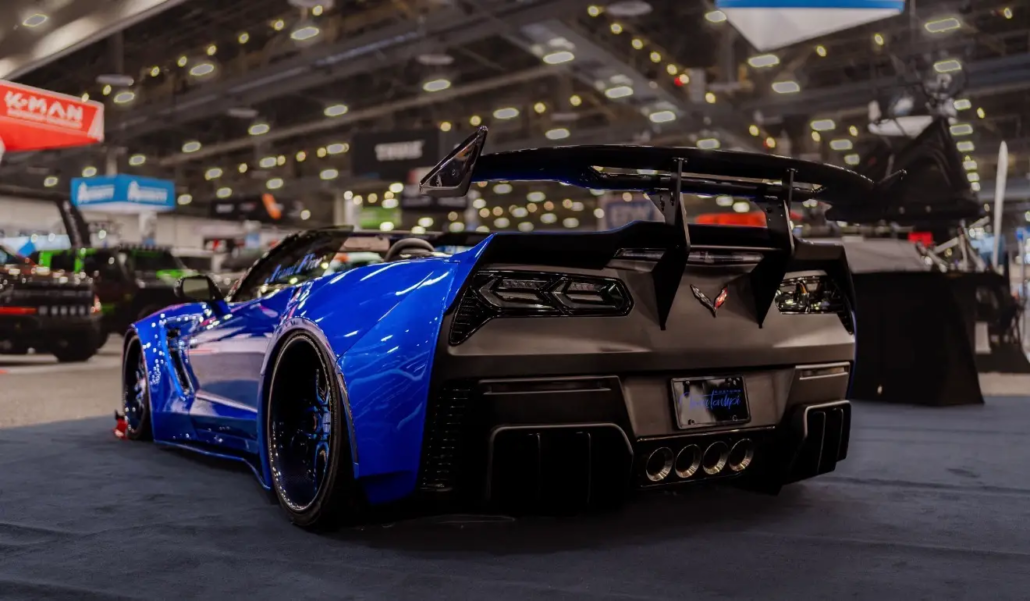
Corvette GT2 Wing Review for Serious C7 Builds
A Corvette can wear plenty of rear spoilers and still look factory-adjacent. A properly chosen GT2 wing does the opposite. This Corvette GT2 wing review is for the owner who wants the rear of a C7 to carry the same authority as the front splitter, side skirts, diffuser, wheels, and stance – not disappear behind them.
The right wing is not a casual accessory. It changes the entire silhouette from the rear three-quarter view, draws the eye across the roofline, and gives the car a more deliberate motorsport profile. Get it right and the Corvette looks lower, wider, and more expensive. Get it wrong and even a beautiful carbon-fiber piece can look disconnected from the build.
Corvette GT Wing Review: What It Changes
A GT2 wing creates a visual centerline above the deck lid. That matters on the C7 because the factory body already has sharp shoulders, angular taillights, and a rear fascia designed around horizontal width. A wing adds height and technical aggression, but its best work is often in how it finishes the car’s proportions.
On a stock-body Stingray or Grand Sport, a moderate-height GT wing can give the rear end a race-inspired edge without swallowing the factory lines. On a wider, more dramatic build, the wing has a different job: it must hold its own against enlarged quarters, a deep diffuser, and a front end that makes a serious statement. A small lip spoiler can look lost in that environment. A well-sized GT wing gives the complete build visual balance.
This is why wing selection should happen early, not after every other exterior part has already been installed. Rear aero needs to speak the same design language as the rest of the car. The endplates, pedestal shape, blade profile, and carbon weave all contribute to whether the result looks designed or simply added on.
Carbon Fiber Is More Than the Finish
Real carbon fiber is part of the appeal, especially on a Corvette built to stand apart at shows, meets, and rolling events. The weave gives the wing depth that painted plastic cannot duplicate. Under direct sun or parking-lot lights, quality carbon creates a layered visual texture that makes the piece feel like automotive art rather than a generic aftermarket spoiler.
But appearance is only half the review. Construction and finish determine whether that carbon continues to look elite after months of heat cycles, washing, road debris, and exposure. A premium wing should have consistent weave alignment across visible surfaces, clean edges, a high-quality clear coat, and mounting areas built to support the hardware without feeling thin or unfinished.
Carbon fiber also brings a practical advantage: low weight. That does not magically turn every street Corvette into a track weapon, but reducing unnecessary mass high on the car is never a bad direction. More importantly, a lighter, purpose-built wing avoids the bulky feel that can come from poorly executed alternatives.
For owners who want a painted body-color build, carbon can still be the right material underneath. The decision comes down to the theme. Exposed carbon works best when it is repeated with intention – perhaps through a front splitter, side skirts, rear diffuser, mirror caps, or a carbon interior detail. One isolated carbon wing on an otherwise uncoordinated car can look like an afterthought. A connected carbon package looks commanding.
Street Presence Versus Functional Aero
The question always comes up: does a GT wing add downforce? The honest answer is that it depends on the wing’s profile, angle, dimensions, mounting height, vehicle speed, and how the rest of the car manages airflow. Functional aero is a system. A rear wing cannot be judged as if it operates alone.
At track speeds, a properly engineered wing can contribute meaningful rear stability and aerodynamic load. Yet an aggressive angle can also increase drag, and a mismatched setup can alter the car’s balance in ways that are not automatically beneficial. If the car sees serious circuit use, the wing should be selected and adjusted with the total package in mind: front splitter, underbody airflow, tire setup, alignment, suspension, and driving goals.
For many Corvette owners, though, the primary return is visual. There is nothing shallow about that. A high-end custom build is meant to create a reaction. It should look lethal pulling into a show, parked outside a restaurant, or rolling through the city at night. The GT wing gives the C7 a competition-bred signal before the exhaust even speaks.
The key is being clear about the mission. If you need measurable track performance, prioritize proven aero geometry and professional installation. If you are building a show-stopping street car, prioritize proportion, materials, finish, and how the wing completes your Corvette’s overall identity. The strongest builds can do both, but they do not pretend those goals are identical.
Fitment Is the Difference Between Premium and Problematic
A wing can have an excellent shape and still fail the build if fitment is careless. Deck-lid curvature, pedestal placement, hardware access, and the way the blade sits relative to the rear glass all deserve attention. On a C7, the rear end is too sculpted to forgive awkward gaps or a wing that looks slightly crooked from behind.
Before installation, confirm exact model-year and body-style fitment. A part intended for one Corvette configuration should not be forced onto another just because it is close. Check whether the wing requires drilling, whether reinforcement is needed beneath the deck lid, what mounting hardware is included, and how the installation affects existing spoilers or trim.
Professional installation is worth serious consideration on a premium carbon-fiber part. Measuring the mounting locations correctly, protecting painted surfaces, sealing drilled areas when applicable, and torquing hardware properly are not details to rush. A wing that sits perfectly level and secure looks expensive because it is installed like it belongs there.
Also consider the daily realities. Higher wings can slightly affect rearward visibility, complicate certain car covers, and draw more attention from everyone around the car. For some owners, those are nonissues. For others, a lower-profile spoiler may better suit a Corvette driven every day. There is no universal answer, only the build you want to live with.
Choosing the Right GT2 Wing for Your Corvette
The best Corvette GT2 wing is the one that matches the car beneath it. A factory-bodied C7 with stock ride height may need restraint, while a lowered Corvette on forged wheels can handle a more assertive blade. A widebody build demands even more conviction. When the car carries widened fenders, carbon side skirts, a deep front splitter, and an aggressive rear diffuser, a timid rear spoiler can weaken the entire composition.
Pay close attention to three visual relationships: the wing’s width versus the rear body, the height versus the roofline, and the endplates versus the rest of the car’s sharpness. A wing that is too narrow can make a wide Corvette feel visually top-heavy. One that sits excessively high may overpower a refined build. Endplates that are too plain can feel generic, while overly busy shapes can clash with the C7’s already aggressive surfaces.
This is where designer-led aero makes a difference. Ivan Tampi Customs approaches Corvette styling as a complete visual language, where carbon-fiber components are not random upgrades but parts of a signature, show-car-level transformation. The goal is not to make a Corvette merely louder. The goal is to make it unmistakable.
The Verdict for C7 Owners
A GT2 wing is one of the fastest ways to change how a Corvette is perceived, but it deserves more thought than a quick add-to-cart decision. The best examples add authority without compromising proportion, showcase carbon fiber without relying on it as a gimmick, and support the car’s real purpose – whether that is track days, weekend drives, or taking center stage at a show.
Choose the wing after you have defined the personality of the build. If your C7 is meant to look wider, lower, sharper, and impossible to confuse with stock, the right GT wing is not the finishing touch. It is the piece that makes the whole rear end mean business.
