
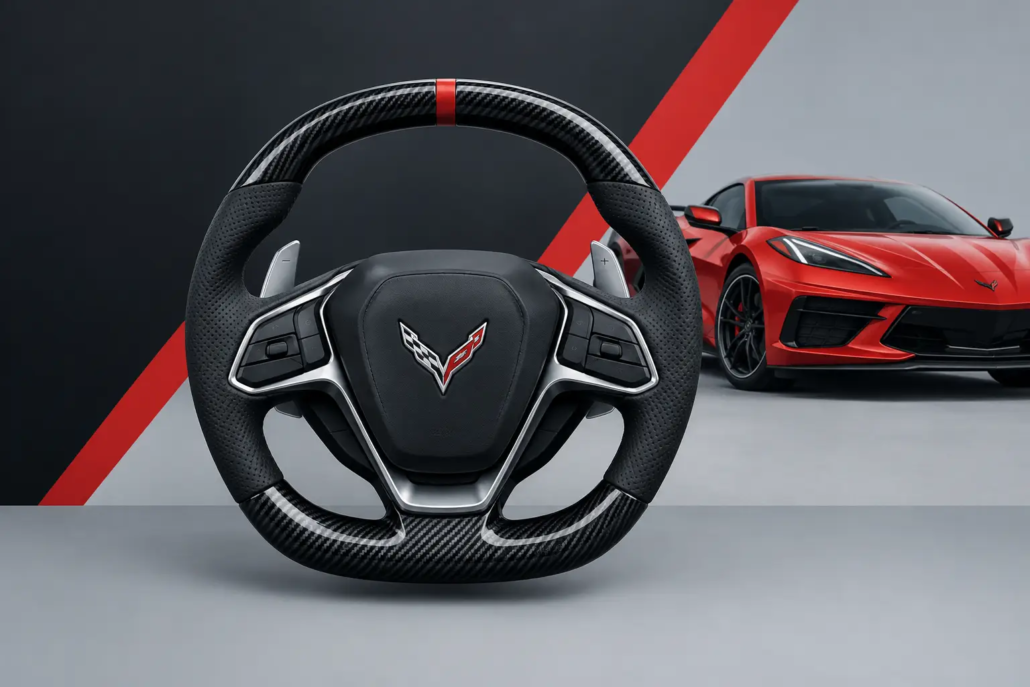
Carbon Fiber Steering Wheel Corvette Worth It?
The factory Corvette wheel does its job. But when the cabin is surrounded by carbon trim, aggressive aero, forged wheels, and a stance built to command attention, the stock steering wheel can become the one piece your hands keep reminding you is still factory. A carbon fiber steering wheel Corvette build turns into more than a cabin upgrade. It puts exotic-car texture, race-inspired shape, and a custom visual signature at the exact point where driver and machine meet.
For C7 and C8 owners building beyond the usual bolt-on look, the right wheel is not an afterthought. It is the interior component that makes every ignition, cruise, and car-show walkaround feel more intentional.
Why a Carbon Fiber Steering Wheel Corvette Build Changes the Cabin
Carbon fiber has impact because it speaks the same design language as a serious performance build. The material carries a technical, motorsport-driven appearance that works naturally with a Corvette’s sharp body lines, exposed aero, and low seating position. A properly finished wheel gives the cockpit a more exotic feel without filling the interior with unnecessary accessories.
The visual difference is immediate, especially in a C7. The factory interior can be dramatically improved by replacing broad sections of molded plastic and standard leather with exposed carbon fiber, premium perforated leather, Alcantara, or a combination of all three. On a C8, the wheel can reinforce the cockpit’s fighter-jet layout while adding another layer of contrast against the dash, center console, and seat trim.
There is a functional side, too. Many aftermarket wheel designs use a thicker grip, more defined thumb contours, and a flat-bottom profile. Those changes can make the wheel feel more planted in your hands during a hard pull, a canyon road, or a weekend track session. But the benefit depends on the design. A wheel that is too thick for your hand or too aggressively shaped can look incredible and still become tiring on long drives.
The Difference Between Real Carbon Fiber and a Cosmetic Shortcut
Not every glossy black wheel has earned the carbon fiber name. For a premium Corvette interior, construction and finish matter as much as the pattern itself.
A quality carbon fiber steering wheel typically uses a factory wheel core or an application-specific core, with carbon sections formed and finished around it. The exposed weave should be clean, symmetrical where the design allows it, and protected under a clear coat that resists fading and yellowing. The surface should look deep under direct light, not flat, printed, or covered in a decal-like film.
A carbon overlay can be a valid styling choice for certain trim pieces, but it is not the same as a fully reworked steering wheel. Overlays preserve more of the factory wheel’s feel and can be a lower-commitment change. A complete custom wheel transforms the entire grip area, shape, materials, and visual presence. For a show-car-level Corvette, that distinction is visible before anyone opens the door.
Finish also deserves more thought than many owners give it. Gloss carbon reflects light and delivers the high-end show build effect most people expect. Matte carbon creates a darker, more technical character and can reduce windshield glare. Forged carbon brings a chopped-fiber, fragmented look that feels more modern and aggressive than a traditional twill weave. None is automatically better. The right choice depends on the carbon already present in your cabin and exterior.
Match the Wheel to the Rest of the Build
A wheel should not fight the rest of the car. If your Corvette wears exposed twill carbon splitters, skirts, wing elements, or a full XIK-inspired exterior, a matching twill weave creates a deliberate visual thread from cockpit to bodywork. If the build leans blackout with satin paint, smoked lighting, and dark wheels, matte or forged carbon may suit the direction better.
Accent materials matter just as much. Red stitching can tie into brake calipers, seat belts, or interior trim. Alcantara at the 9 and 3 o’clock positions adds a race-car feel and extra grip, though it requires more care than leather. Perforated leather is a strong choice for street-driven cars because it is easier to maintain while still looking elevated. A centered stripe can look sharp, but it should complement the color story rather than introduce a random new shade.
Fitment Is More Than Model Year
A Corvette steering wheel must work with the equipment already in your car. That includes the airbag, steering-wheel controls, paddle shifters on automatic cars, heating functions where equipped, and any trim or switch assemblies transferred from the original wheel. C7 and C8 components are not interchangeable simply because both carry the Corvette badge.
Before buying, confirm the exact generation, model year, trim level, and transmission configuration. Ask whether the wheel is supplied as a complete assembly, built on an OEM core, or designed to accept your original airbag and control modules. This is particularly important when a listing shows a wheel without an airbag. In many cases, the original airbag is retained and transferred, but the process should never be assumed.
The wheel must also preserve the factory clock spring relationship and proper button operation. A custom wheel that looks flawless but creates an airbag warning light, nonfunctioning controls, or paddle-shifter issues is not a premium upgrade. It is an expensive problem sitting directly in front of you.
Heated Wheels, Paddles, and Daily-Driven Reality
If your Corvette is a garage queen that appears at shows and weekend meets, your priorities may lean heavily toward finish, color, and extreme contours. If the car sees daily miles, heated-wheel compatibility, leather durability, and a comfortable grip shape become more important.
This is where an honest build plan wins. Alcantara feels exceptional but can show wear from skin oils, lotions, and regular use. Gloss carbon looks dramatic but reveals fingerprints more easily than satin finishes. A heavily sculpted race profile may be perfect for spirited driving yet less relaxing during a three-hour highway run. The best wheel is not the most aggressive option on a product page. It is the one that supports how you actually use the car.
Installation: Treat the Airbag System With Respect
Steering wheel installation is within reach for an experienced enthusiast or qualified shop, but it is not a casual cosmetic swap. The airbag system, electrical connectors, wheel alignment, and factory torque requirements all need proper attention.
Start by disconnecting the battery and allowing adequate time for the restraint system to power down before touching airbag-related components. The original steering wheel should be marked before removal so the replacement can be centered correctly. Connectors must be handled carefully, and every transferred control should be tested after installation. If you are not fully comfortable working around an airbag module, book the installation with a professional familiar with late-model Corvettes.
Do not force-fit trim pieces or improvise electrical connections. A premium wheel deserves a clean installation with no warning lights, no loose trim, and no compromise to the safety systems engineered into the car.
What to Look for Before You Order
The strongest custom wheels balance dramatic design with usable craftsmanship. Look closely at the product photos, but do not stop there. Ask about the wheel core, whether factory controls and paddles transfer, how the carbon is finished, and whether the materials are appropriate for your intended use.
For a high-end build, pay attention to these details:
- Consistent carbon weave alignment and a clear coat with real depth
- Application-specific fitment for your exact Corvette generation and equipment
- Compatibility with OEM airbag, controls, paddles, and heated-wheel functions when applicable
- A grip profile that matches your hand size and driving style
- Interior accents that connect to the seats, stitching, calipers, or exterior carbon
The wheel is also an opportunity to avoid a pieced-together cabin. If you are adding carbon, choose a finish that works with the console, door trim, dash, and any existing overlays. Ivan Tampi Customs approaches Corvette customization as automotive art, and that mindset matters here: the best results come from a build where every material looks chosen, not merely added.
A Small Part With a Full-Time Presence
Exterior carbon gets the photographs. A widebody conversion, wing, diffuser, or aggressive front end earns the crowd around the car. But once you slide into the driver’s seat, the steering wheel becomes the part that defines the experience mile after mile.
Choose a carbon fiber steering wheel that respects the Corvette’s factory systems, matches the visual force of the rest of the build, and feels right in your hands. Then every time the engine fires, the cabin will remind you that this Corvette was built to be seen – and built to be driven.
