
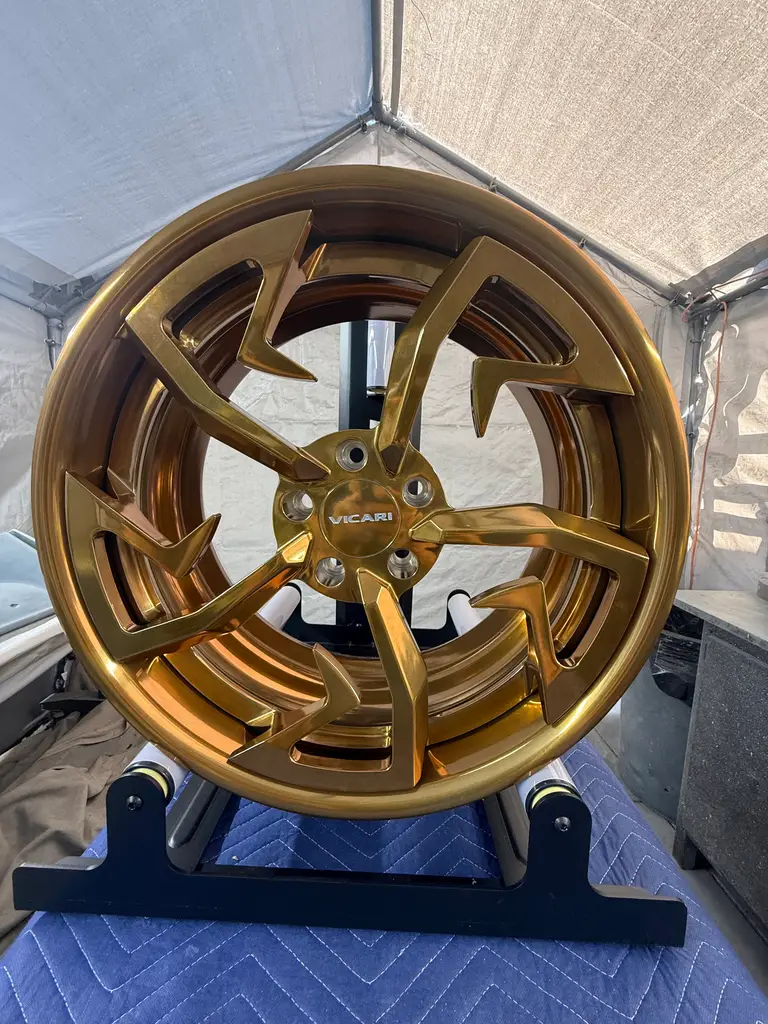
C7 Corvette Vicari Forged Wheel Fitment Done Right
A forged wheel can make a C7 look lower, wider, and far more intentional before the car ever moves. But C7 Corvette Vicari forged wheel fitment is not a matter of choosing the biggest diameter and hoping the tires clear. The wrong offset can bury a face behind the fender, push a tire into the liner, or turn an aggressive build into a car that rubs at every compression.
For a factory-body Stingray, Grand Sport, or Z06, the goal is controlled aggression: a wheel that fills the arch, clears the brakes, and lets the tire work. For a widebody Corvette, fitment becomes a design decision with even higher stakes. The wheel has to match the body’s new visual mass. It cannot look timid under a carbon-fiber quarter panel built to dominate the road.
Start With the C7 Corvette Forged Wheel Fitment Basics
Every wheel decision begins with five measurements: bolt pattern, diameter, width, offset, center bore, and brake clearance. The C7 Corvette uses a 5×120 bolt pattern. That detail is simple, but the rest of the equation is where premium fitment is earned.
Wheel diameter determines the visual scale and influences tire availability. Eighteen-inch wheels remain a serious performance choice for owners prioritizing sidewall and track-focused tire options. Nineteens and twenties are the classic C7 show-and-street combination, with a sharper visual profile and enough sidewall for a properly selected performance tire. A 20-inch front and 21-inch rear setup can look exceptional on a purpose-built widebody, but it demands accurate measurements and tire sizing that preserves overall rolling diameter.
Width and offset create the stance. Width determines how much wheel and tire package you can carry. Offset determines where that package sits relative to the hub. A lower or more negative offset pushes the wheel outward; a higher positive offset pulls it inward. Neither is automatically better. A forged wheel with a dramatic concave profile may look incredible, but only if its spoke geometry and offset place the lip and tire exactly where the car needs them.
Center bore matters too. A hub-centric fit is the standard for a high-end build. It centers the wheel correctly on the Corvette hub rather than relying on the lug hardware to do all the positioning. That is the level of precision a serious street car, show car, or high-speed build deserves.
Factory-Body C7 Fitment Is About Balance
A stock-body C7 does not need cartoonish wheel specs to look lethal. It needs a package designed around the body’s factory fender line, suspension travel, and brake system. The front end is usually the limiting factor because the tire must clear the liner, fender edge, and steering range at full lock.
A common street-oriented direction is a 19-inch front wheel and 20-inch rear wheel, with widths selected to support a substantial tire without distorting its sidewall. Many owners step into approximately 10-inch-wide fronts and 11- to 12-inch-wide rears, but exact offset should never be copied blindly from another car. Ride height, alignment, tire model, brake package, and whether the car has magnetic ride control can all change what clears.
The rear offers more room, but it is not limitless. A wider rear wheel can deliver a fuller, more planted appearance, yet a tire that sits too far outward can contact the quarter-panel edge under compression. Too far inward, and it can interfere with suspension components or lose the flush stance that makes forged wheels worth the investment.
Tire brand also changes the answer. A 305-section tire from one manufacturer can measure noticeably wider than a 305 from another. Sidewall shape, shoulder design, and real measured tread width are all part of fitment. This is why a spec that clears on one C7 may rub on another wearing a different tire line.
Brake Clearance Is Not a Footnote
The C7’s brake options deserve respect. Base brakes, Z51 hardware, Grand Sport brakes, Z06 brakes, and aftermarket big-brake kits do not share the same clearance needs. Diameter alone does not guarantee clearance. The inner barrel profile and the spoke design are usually the real deciding factors.
A wheel can physically bolt on and still touch a caliper behind the spokes. That is an expensive mistake, especially with a custom finish or made-to-order forged set. Confirm the brake template before production. If the car has aftermarket calipers, measure from the hub face to the outermost caliper point and provide those dimensions to the wheel supplier.
Widebody Fitment Changes the Entire Formula
A widebody is not an invitation to guess bigger. It is an opportunity to build the wheel package around the car’s new architecture. The fender extension adds visual and physical width, but the ideal wheel spec depends on how the kit is installed, how much inner structure is retained or modified, and where the new fender line sits relative to the original hub face.
The XIK Widebody Kit by Ivan Tampi Customs gives the C7 a far more exotic silhouette, and the wheel fitment needs to support that statement. A narrow wheel hiding inside a widened rear quarter kills the transformation. The right forged setup brings the face, lip, and tire outward so the car looks engineered as one complete design.
Before ordering wheels for any widebody C7, measure the car after the final bodywork is installed. Measure from the hub mounting surface outward to the inside of the fender at ride height. Then account for tire section width, sidewall growth under load, suspension compression, camber, and a safety margin. Do not measure with the car hanging in the air and call it finished. The suspension position at ride height is what matters.
A widebody car can often support significantly wider rear wheels and tires than a factory-bodied C7, but more width is not always more beautiful. An excessively stretched tire can make a premium forged wheel look under-tired. A tire that bulges too far beyond the wheel can look heavy and create clearance problems. The right package has tension: enough tire to perform, enough wheel face to make an impact, and enough space for the bodywork to breathe.
Offset Must Be Calculated, Not Chosen by Vibe
Offset is where the difference between custom fitment and generic fitment becomes obvious. A wheel that has the correct width but the wrong offset will either disappear into the body or sit outside the fender line. Spacers can solve small final-position issues, but they should not be used to rescue a fundamentally incorrect wheel specification.
For a one-off forged set, provide accurate measurements rather than asking for “flush.” Flush means different things to different builders. Define whether you want the tire sidewall nearly even with the fender, the wheel face near the fender edge, or a slightly tucked motorsport look. On a C7 with aggressive aero, a square, planted stance can look phenomenal, but clearance has to remain real at steering lock and full compression.
Choose Forged Construction for More Than the Look
Forged wheels belong on a high-level C7 build because they give designers more freedom with strength, weight, and styling. A properly engineered forged wheel can be lighter than many cast alternatives while supporting a more dramatic concave profile, thinner spoke design, and custom width or offset. That matters when the wheel is expected to carry the visual authority of a widebody conversion.
The trade-off is cost and lead time. Forged wheels are a premium decision, particularly when ordered in custom specifications and finishes. They also demand more homework. A generic off-the-shelf spec may be quicker, but it rarely delivers the exact fitment a show-level Corvette deserves.
Finish deserves practical consideration as well. Brushed, polished, tinted, and gloss finishes each change the personality of the wheel. A dark center can make the wheel visually recede and let carbon fiber take the spotlight. A brushed or machined finish can amplify spoke detail and make the entire wheel package a centerpiece. On a car that already carries aggressive aero, the best choice depends on whether you want contrast or a more sinister, unified look.
The Measurements to Confirm Before Ordering
Before committing to a forged wheel build, confirm these details with actual measurements and the final configuration of the car:
- Exact C7 model year and trim, including Stingray, Z51, Grand Sport, Z06, or ZR1.
- Current and planned brake package, plus any caliper or rotor changes.
- Final ride height, suspension type, alignment targets, and whether the car will be driven hard.
- Factory body or widebody dimensions measured at ride height.
- Desired tire brand, model, and size, not only the wheel diameter and width.
- The visual target: tucked, flush, near-flush, or aggressively pushed to the fender line.
Those details prevent the most common premium-wheel failure: ordering a beautiful set that technically fits but does not fit the build.
Fitment Should Match the Car’s Mission
A C7 built for canyon runs, highway pulls, and occasional track use needs more tire clearance and suspension travel than a car designed primarily for show-floor impact. A low static car may accept a sharper, closer fitment until it encounters a steep driveway. A car on air suspension has flexibility at a standstill, but it still needs safe clearance at every steering and driving height.
That is the standard to hold: not whether the wheels clear in a parking lot, but whether they work when the chassis loads up, the steering is turned, and the Corvette is driven the way it looks. Measure the finished car, choose the tire before finalizing the wheel, and make every millimeter serve the stance. That is how forged wheels become part of the build’s signature instead of an expensive compromise.
