Why Wet Carbon Fiber Car Parts Stand Apart
A factory body line can look clean. A properly executed carbon piece can make it look dangerous. Wet carbon fiber car parts are for owners who want more than a black accessory bolted onto a car – they want visible weave, deep clear, and a finish that turns light into movement across every contour.
On a Corvette, Mustang, Camaro, BMW, Mercedes, or exotic build, carbon fiber has to earn its place. The part must follow the body with authority, the weave must sit straight where the eye lands, and the clear coat has to look as expensive as the car it is transforming. When those details are right, carbon does not disappear into the design. It becomes the design.
What Makes Wet Carbon Fiber Different?
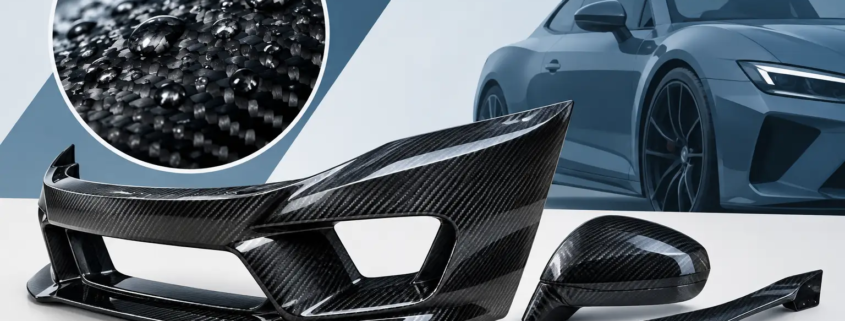
Wet carbon fiber construction starts with carbon cloth and liquid resin. The fabric is hand laid into a mold, saturated with resin, shaped, and cured to create a rigid composite component. The result is often finished with a high-gloss UV-resistant clear coat that puts the weave on full display.
That visible pattern is the point. Wet carbon carries a richer, more dimensional visual character than a painted part or a carbon-look overlay. Under direct sun, garage lighting, and camera flashes at a show, the weave reveals the craftsmanship behind the surface. On aggressive aero – splitters, side skirts, diffusers, spoilers, deck wings, and widebody panels – it adds a technical, race-bred edge without needing loud graphics.
The term can be confusing because shops and brands sometimes use it differently. In the enthusiast market, wet carbon generally refers to a resin-based carbon construction with an exposed gloss weave. It is different from dry carbon, which commonly uses pre-impregnated material and specialized curing methods to chase the lowest possible weight. Both can be premium. The better choice depends on whether the build is centered on visual impact, weight reduction, track use, budget, or all four.
Wet Carbon Fiber Car Parts Are Built for Presence
A carbon front splitter is not just a lower lip. It changes how the front end meets the pavement. Carbon side skirts stretch the visual profile of the car and make a lowered stance feel even more planted. A rear diffuser or wing gives the back of the vehicle a deliberate finish rather than an afterthought.
Wet carbon shines on parts that live in the viewer’s line of sight. The hood edge, mirror caps, rear deck, roof, side skirts, and trunk spoiler are all areas where the weave can create contrast against paint. On a white, red, yellow, silver, or bright blue car, exposed carbon delivers instant definition. On black paint, it rewards a closer look with texture and depth that gloss black plastic cannot reproduce.
This is why material placement matters. Covering every possible surface in carbon can flatten a build if there is no hierarchy. A stronger approach is to let the carbon frame the car’s key architecture: the lower aero, the rear exit, the hood or deck area, and a few intentional accents. The car stays cohesive while the carbon reads as premium automotive art.
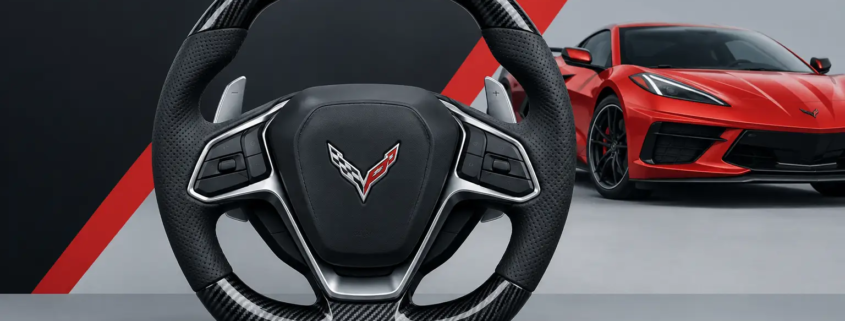
For a dramatic C7 Corvette transformation, a complete widebody system changes the equation. Replacement bumpers, widened fenders, quarter panels, skirts, spoilers, and splitters need to work as one visual statement. A random collection of add-on pieces may look modified. A coherent carbon-fiber design looks commissioned.
The Finish Tells You What You Are Buying
Not all glossy carbon is created equal. The weave should be consistent, symmetrical where the design allows it, and aligned with the contours of the part. On a large panel, a crooked weave line can pull attention away from the vehicle. On a small trim piece, it may be less noticeable, but it still separates careful work from rushed production.
Look closely at the clear coat, too. Quality wet carbon should have depth, not a hazy or wavy appearance. Pinholes, dry-looking sections, resin-rich puddling, exposed edges, and uneven gloss are warning signs. These flaws are not merely cosmetic. They can point to inconsistent manufacturing controls or a finish that will not age gracefully under heat and sunlight.
Fitment is equally important. Carbon components are composites, not stamped factory steel, so some variation can exist. That does not excuse poor panel gaps, mounting holes that need major rework, or a part that fights the body line it was designed to enhance. Premium parts should be engineered around the specific vehicle, model year, and mounting locations whenever possible.
A professional installation also makes the difference between a show-car result and a weekend compromise. Test-fitting before final mounting, protecting exposed edges, setting consistent gaps, and using the correct hardware are part of the process. Large aero and widebody components especially deserve a shop that understands composites and custom bodywork.
Weight Matters, but It Is Not the Only Measure
Carbon fiber has a reputation for being light, and that reputation is earned. Still, buyers should not assume every wet carbon component is dramatically lighter than every alternative. The final weight depends on the part’s size, resin content, internal reinforcement, mounting points, and whether it replaces a factory panel or mounts over it.
Dry carbon can be the stronger choice for a competition-focused owner pursuing every possible pound. It is often favored where weight targets, advanced processes, and higher budgets take priority. Wet carbon remains an excellent choice for owners who want a genuine carbon-fiber part with an unmistakable finish, durable construction, and serious visual payoff.
For most street-driven show builds, the question is not whether a splitter saves the maximum theoretical weight. The question is whether it fits, survives real roads, matches the rest of the car, and makes the vehicle impossible to ignore when it arrives.
Where Carbon Needs Real-World Protection
A carbon part can be tough, but it is not invincible. Front splitters meet steep driveways, road debris, curbs, parking blocks, and speed bumps. Side skirts live near tire spray and gravel. Rear diffusers collect heat, dirt, and exhaust residue. A premium build deserves a realistic plan for where and how the car will be driven.
For street cars, ride height and driving habits matter as much as the material itself. A low splitter may look perfect in photos but become a sacrificial surface if the car sees rough roads every day. Some owners accept that risk because the stance is worth it. Others choose a slightly more forgiving setup or reserve the car for events. Neither choice is wrong – it is about building for your actual use, not someone else’s highlight reel.
Protective film can be worthwhile on high-impact areas, particularly the leading edge of a splitter, skirts, and lower bumper surfaces. Regular washing also matters. Use clean microfiber towels, quality automotive soap, and gentle technique. Avoid harsh abrasives and careless automatic washes that can put fine scratches into the clear coat. UV exposure is another reason to keep a show-quality carbon build garaged or protected when possible.
Choose Parts That Belong on the Car
The strongest custom cars have a point of view. That may be an exotic widebody profile, a track-inspired aero package, or a restrained carbon treatment that sharpens factory lines. What matters is that each component speaks the same design language.
Before buying, confirm the exact vehicle fitment, whether the part is a replacement or an overlay, what hardware is included, and whether professional installation is recommended. Ask how the part is finished, whether the carbon weave is exposed, and what preparation is required before paint, clear coat, or mounting. For major conversions, understand the full scope before the first panel comes off. A widebody build can involve paintwork, wheel and tire planning, suspension choices, lighting, and careful alignment of every exterior piece.
Ivan Tampi Customs approaches carbon not as filler, but as a defining material in a car’s transformation. That is the standard worth chasing: parts that do not simply bolt on, but change the entire silhouette.
The right carbon choice should make you look back at the car after you park it. Choose the pieces that respect the body lines, match the ambition of the build, and still make sense for the roads you plan to drive.